GOAT comp
USA Climbing recently held a climbing competition at the GOAT gym in New Jersey. Literally anyone who wanted to come out and compete had the chance to do so. That was great of them to do because it gave current USA athletes a chance to practice competition climbing on officially set comp-style routes. Even better, though, is that it gave potential future competitors the opportunity to try out the same comp-style routes without the added pressure of trying to make the national team. So the competition was great all around.
And the comp went well! The routes were beautifully and creatively set, the vibes were great, and the competitors were clearly giving it their all. The best part about it is that some of the routesetters were there watching us climb their routes, and then answering questions and giving commentary when people asked for it. It allowed people the chance to learn how to think more critically about their competition experience.
After the competition, USA Climbing held a training camp that was only for people who are currently on the US national or development team. The main purpose of this training camp was to help some athletes fine-tune their training for the upcoming IFSC World Championship in South Korea. It was also meant to help those athletes not going to South Korea learn new and useful skills to help them train for future competitions. On the first day of the camp we were asked to read a route and try to get as high as we could in one attempt. Later on we were allowed to project these routes. We spent the next day getting back on the routes that we did during the comp. The goal was to think through and then try out new beta for the climbs we had a hard time with, and/or to try some of the climbs we hadn’t had a chance to try yet. In addition to all the climbing, there were information sessions that allowed us to ask questions and gain helpful information.
One of the information sessions was with Nohl, who is one of USAC’s head competitive route setters. He gave us a deeper look at what goes into the process of setting comp routes for different competitions, and answered any questions that we came up with. Getting to pick the brain of a routesetter who has been setting routes for 16+ years is a really powerful and valuable tool, because it provides athletes with background knowledge on routesetter intentions, which helps us make training for comps a little more effective. He explained that routes are set with the intention of meeting climbers where they’re at, while also challenging them in new and exciting ways.
This makes perfect sense, and I think it’s something I’d noticed since my first World Championship. My training has been consistently influenced and improved by all the moves that would knock me off the wall because I’d never thought to train them. At that first World Championship in 2019, one of the routes were set on a wall that had a much steeper overhang than I’d ever seen. It was then that I learned the importance of being able to campus. In 2021 I learned about high-steps. I timed out on a route because it took me too long to figure out how to get my foot to a hold that was at my knee. I learned ways to train them and make them more effective on the wall. I can now get my feet almost to my hips. In 2022 I learned the hard way about what a same lay-back is. I’d known a bit about what they were, but I wasn’t strong enough to pull them off effectively. After that specific competition I learned them so well that I’m now able to rest in a lay-back. At a different comp in 2022, there was a double gaston on a route and I fell because I didn’t know that move existed. I actually had to look it up after the comp because I hadn’t even seen them in a gym. After that comp I trained it until I coul pull them out whenever I needed to. They’re now a permenant addition to my climbing toolbox.
That said, getting to chat with Nohl and hear his thoughts was very valuable. But Nohl wasn’t the only speaker at the camp. We also got to hear from USA Climbing’s own physical therapist, Nick Purcell. He was gave us insight on how training and climbing effects our bodies, and how that can influence our pain mental and physical pain detectors. Climbing, or any other sport, is hard on the body. It takes a lot of mental and physical effort, which our bodies might have a hard time committing to. Nick pointed out that our bodies can get somewhat confused, and can then send pain signals when it really might just be sore, or stressed.
Another thing Nick mentioned is the importance of noticing and assessing pain without putting a label on it or giving it a story. We will sometimes do this thing where we tell ourselves that since we got hurt doing some exercise we therefore shouldn’t do that exercise. I’ve personally done this, and it’s something I’m still working on. I sometimes have a hard time trying new exercises because I’ve gotten overly sore or tweaked something doing a similar exercise. I’ll tell myself that if I try this or that I’ll tear break something. Or if I have pain at some point I’ll tell myself that the pain came from overexersion or a weird fall I might have taken at some point. When I distract myself with other exercises, or doing a completely different activity, the pain will go away. Nick was saying that if we notice that pain but don’t dwell on it, the pain will fade into the background. If it doesn’t, or if it feels sharp, then it might be something to look into. These tips, plus the other tips he gave that day, were all very helpful.
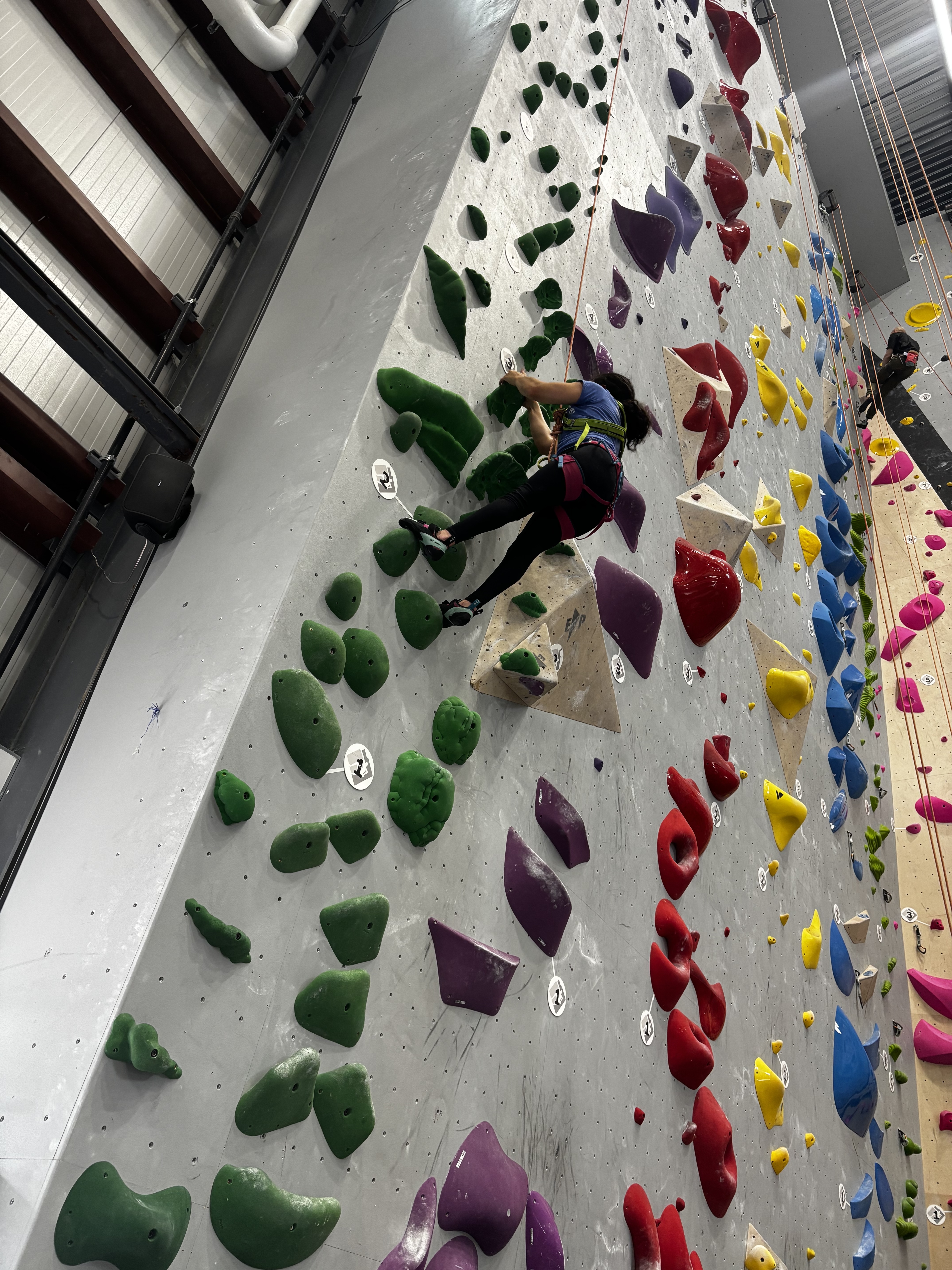
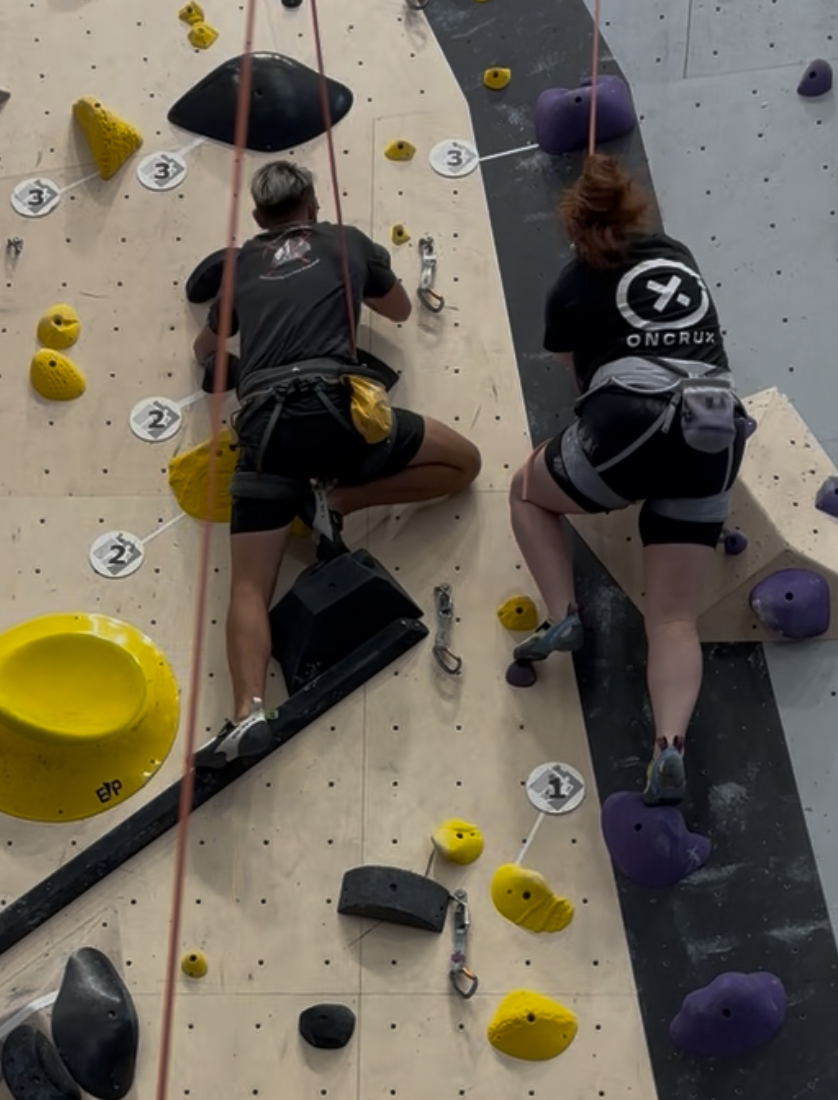
Getting to chat with trusted professionals from the USA Climbing staff during a training camp that directly followed their competition was a super helpful way to prepare for the upcoming World Chanpionships in South Korea. But I haven’t even shown you the climbing yet! The climbs were set by people who participated in a competitive paraclimbing routesetting clinic. You can really see that a lot of time, effort, and thought was put into each and every route that was there. They each had unique challenges, and every athlete who climbed on them looked (and hopefully felt) strong and confident.
Here are some cool photos of some of the climbers:
![Hannah is climbing on a red route. She has her right hand on a hold above her head and her left foot on a hold that’s level with her knee.]